

Hands-on Robotics Education: Inspiring Young Innovators Through Experiential Learning at CS Academy
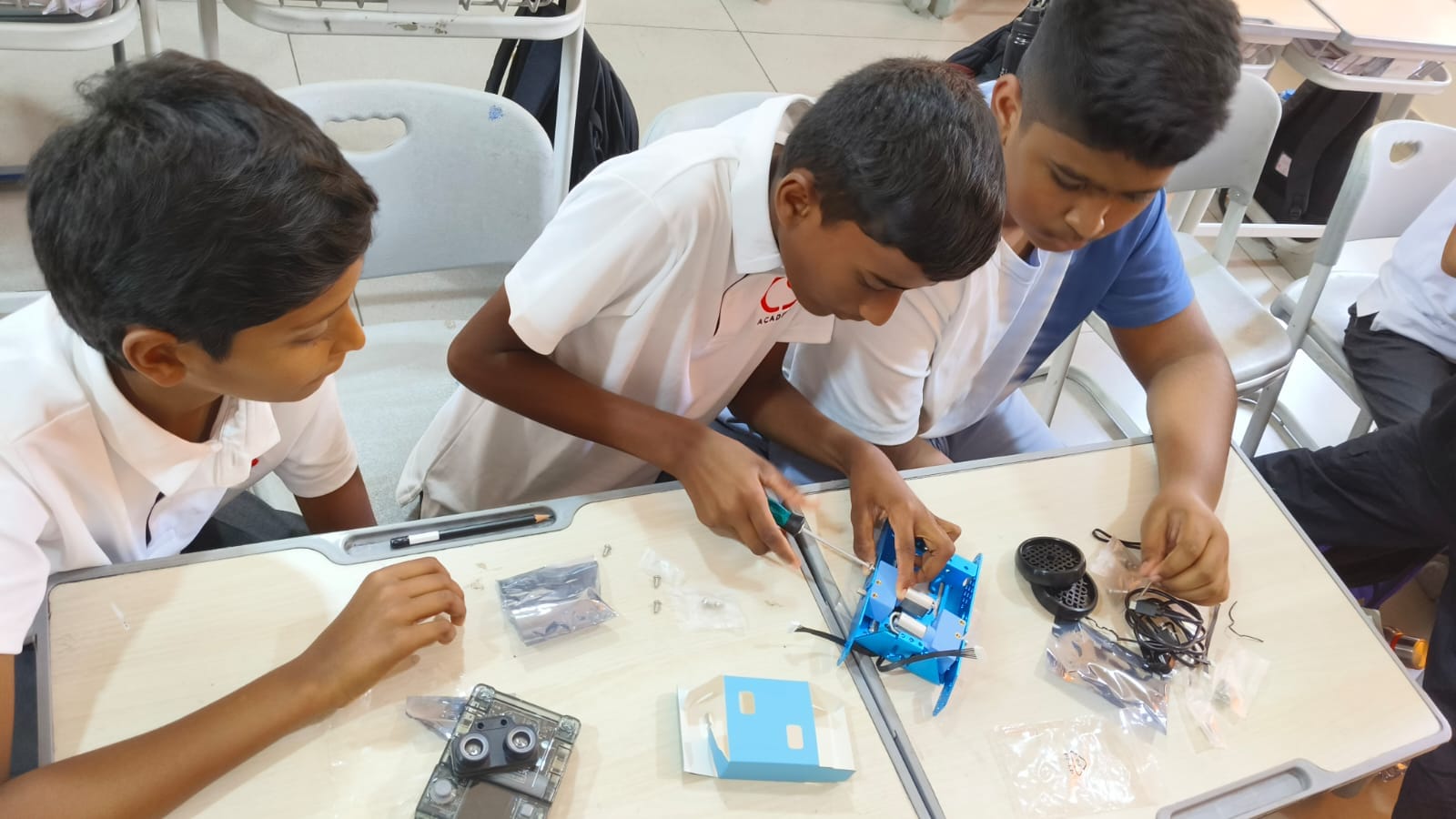
Technology is transforming every industry, and today’s students need more than theoretical knowledge to thrive in tomorrow’s world. They need opportunities to explore, experiment, build, and innovate. At CS Academy, students recently participated in an engaging hands-on robotics activity that introduced them to engineering concepts through experiential learning.
Rather than simply learning about technology, students actively explored robotic components, understood how they work together, and assembled a functional robotic model. The activity encouraged curiosity, teamwork, and creative problem-solving, turning the classroom into a space for innovation and discovery.
Learning by Building
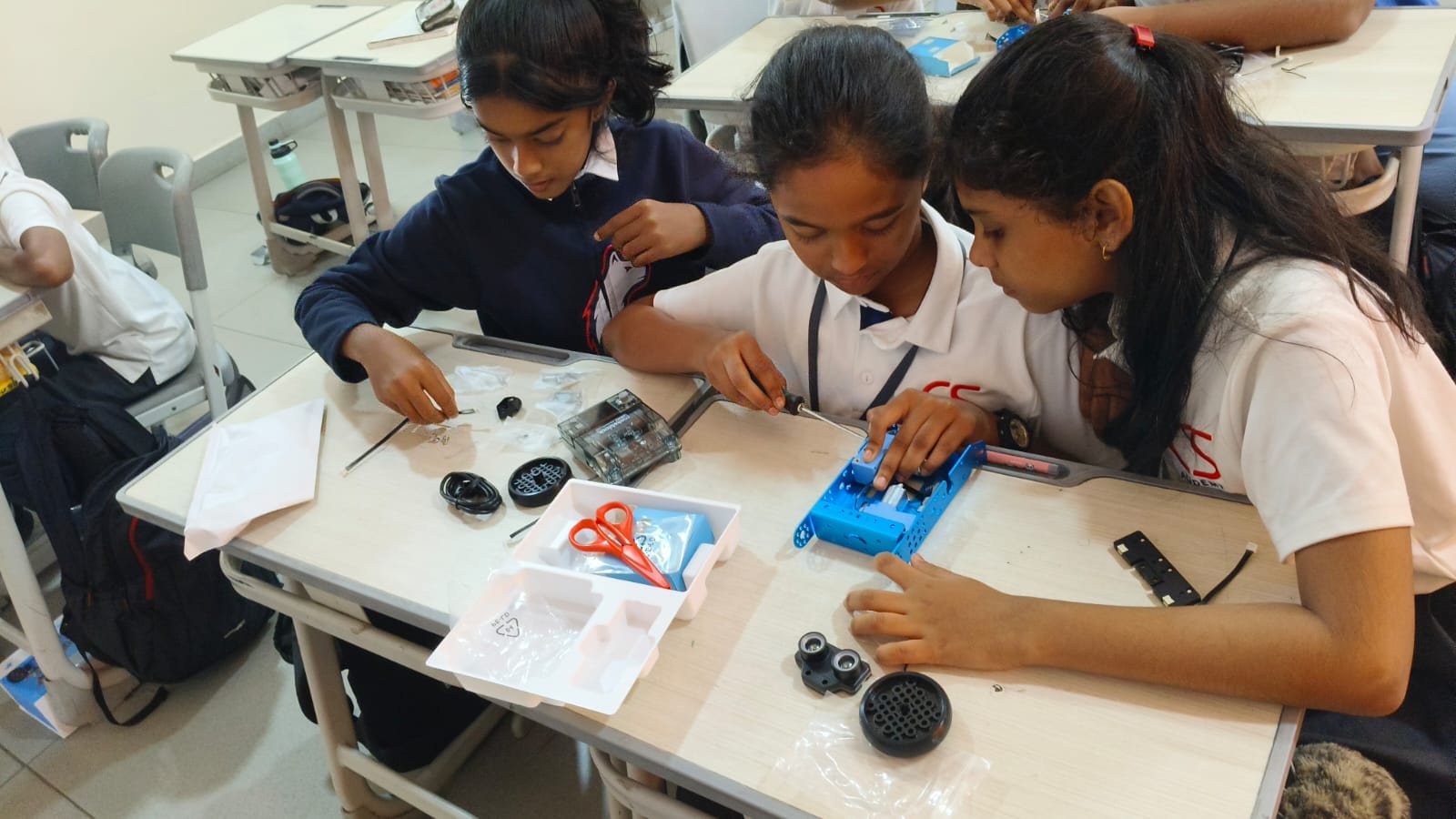
Experiential learning enables students to understand concepts by applying them in practical situations. During the session, students observed, analyzed, assembled, and tested different components while discussing ideas with their peers. This process helped them connect classroom concepts with real-world engineering applications.
By learning through hands-on activities, students developed confidence in exploring technology while strengthening their ability to think critically and solve problems independently.
Developing Future-Ready Skills
Robotics education goes far beyond assembling models. It nurtures a range of essential competencies that prepare students for higher education and future careers. Through practical STEM learning experiences, students develop:
-

Critical Thinking
- Problem Solving
- Logical Reasoning
- Creativity and Innovation
- Engineering Design Thinking
- Teamwork and Collaboration
- Communication Skills
- Computational Thinking
- Digital Literacy
- Confidence in Experimentation
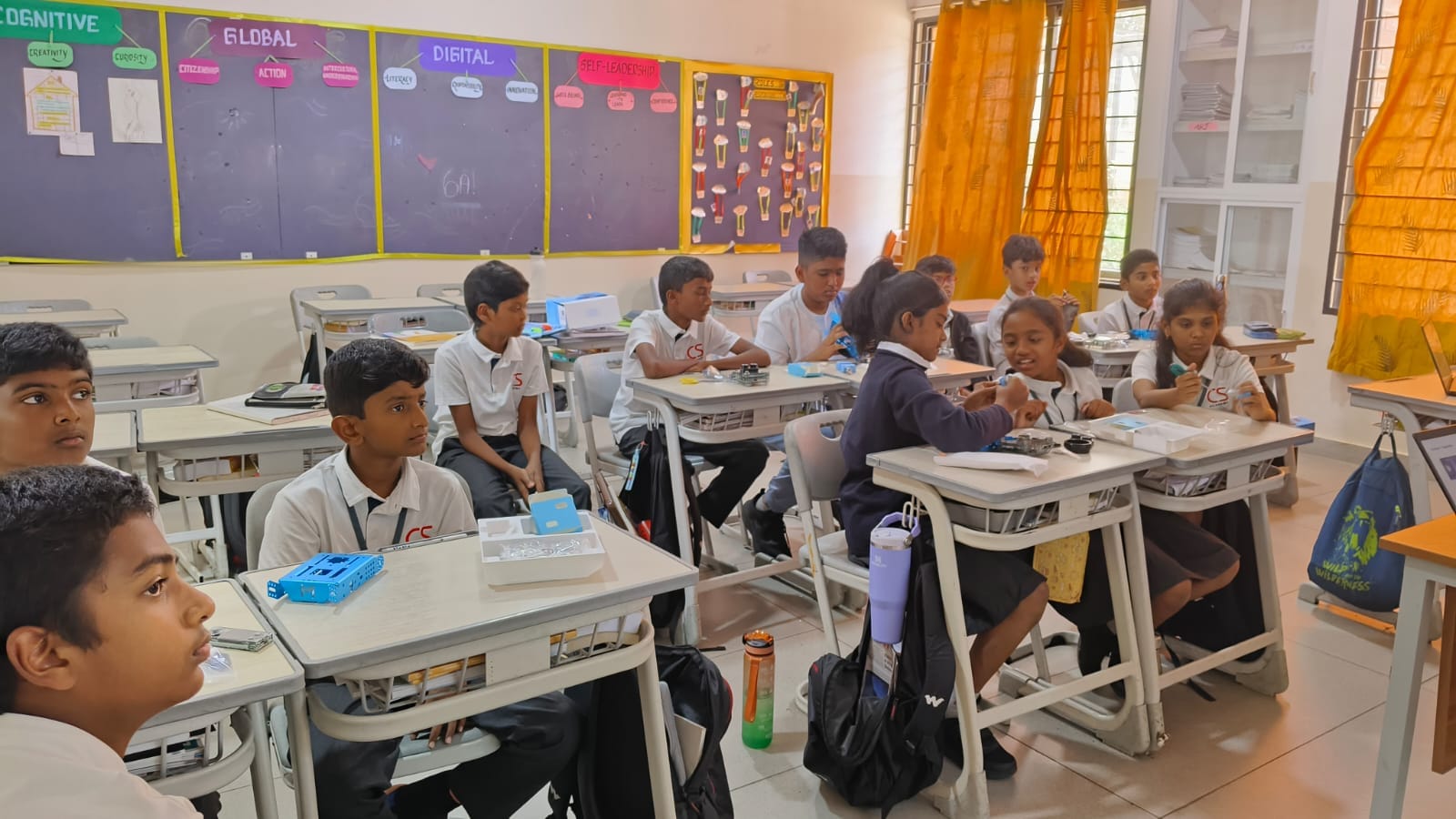
These are among the key competencies increasingly valued in modern education and the future workforce.
Why Experiential STEM Education Matters
Educational institutions around the world are adopting STEM (Science, Technology, Engineering, and Mathematics) and STEAM (Science, Technology, Engineering, Arts, and Mathematics) approaches to create more engaging, interdisciplinary learning experiences.
Hands-on activities encourage students to ask questions, i
nvestigate solutions, test ideas, and learn from experimentation. This approach not only improves academic understanding but also builds resilience,
adaptability, and an innovation mindset.
Organizations such as UNESCO emphasize the importance of STEM education in preparing learners for sustainable development and future careers, while the World Economic Forum consistently identifies analytical thinking, creativity, technological literacy, and problem-solving among the most important skills for the future workforce.
Building Future-Ready Classrooms
As emerging technologies such as Artificial Intelligence, Robotics, Automation, the Internet of Things (IoT), and Digital Manufacturing continue to reshape industries, schools play an increasingly important role in preparing students for these changes.
By integrating experiential learning into everyday education, schools empower students to become confident learners, innovators, and responsible problem-solvers who are ready to embrace future challenges.
At Rapid Future Technology, we are committed to supporting educational institutions with innovative STEM and STEAM learning experiences that inspire curiosity, encourage creativity, and equip students with practical skills for the future.
Further Reading
- UNESCO – STEM Education: https://www.unesco.org
- World Economic Forum – Future of Jobs Report: https://www.weforum.org/reports/the-future-of-jobs-report
- UNICEF – Future Skills for Children: https://www.unicef.org